Deadwood Removal: Why Dead Branches Are More Than an Eyesore
August 29, 2026
Quick Answer: Deadwood removal is the process of cutting dead, dying, or diseased branches out of a tree's canopy before they break loose on their own. The International Society of Arboriculture lists dead and dying branches as the most frequently encountered defect in tree risk assessments, and research on quantified risk models shows that dead branches over 2 inches in diameter overhanging a target are enough to raise a tree's risk rating. Removing those branches protects roofs, vehicles, and people below while keeping decay and disease from spreading into healthy wood. Not every dead twig needs attention right away, but any dead branch of that size near a house, driveway, or walkway should come out.
A red oak in a Huntsville backyard can carry three or four seasons of history in its canopy that nobody notices from the ground. A limb that stopped leafing out after last year's dry stretch. A hanger left over from a spring storm, still wedged in the branches above. A cluster of interior growth that lost its light years ago when the tree beside it grew taller. None of it looks urgent from the patio. All of it is dead weight waiting for the next wind event to decide when it comes down, and where.
How Professional Deadwood Removal Is Done
Deadwood removal follows the same cutting standard as any other pruning work: the ANSI A300 standard for tree care, developed by the Tree Care Industry Association and used as the baseline by ISA Certified Arborists nationwide. It sets clear rules for where and how a cut is made.
The Cut Goes Just Outside the Branch Collar
Cutting flush with the trunk removes the collar entirely, which strips away the tissue the tree needs to seal the wound and leaves it open to decay for years afterward. A proper cut preserves that collar so the tree can compartmentalize the injury on its own.
Larger Limbs Get A Three-Cut Approach
An undercut first, then a top cut to remove the weight of the branch, followed by a final finishing cut at the collar. This sequence keeps the bark from tearing down the trunk as the branch falls, which is a common cause of larger, harder-to-heal wounds.
Timing Is More Flexible Than Live Pruning
Unlike shaping cuts, which are often timed around a species' growth cycle, dead branches can be removed at any point in the year without harming the tree, since there is no living tissue left to disturb. Late fall through winter is still a favored window, since bare branches make it far easier to spot color changes, cracks, and fungal growth that leaves and full foliage would otherwise hide.
WARNING: Deadwood should only be cut from the ground if it can be reached safely with hand tools. Anything requiring a ladder, a climb, or work near power lines calls for a trained crew with the right rigging and equipment, since a falling limb is unpredictable even when it looks like a clean drop.
What Happens When Deadwood Is Left in Place
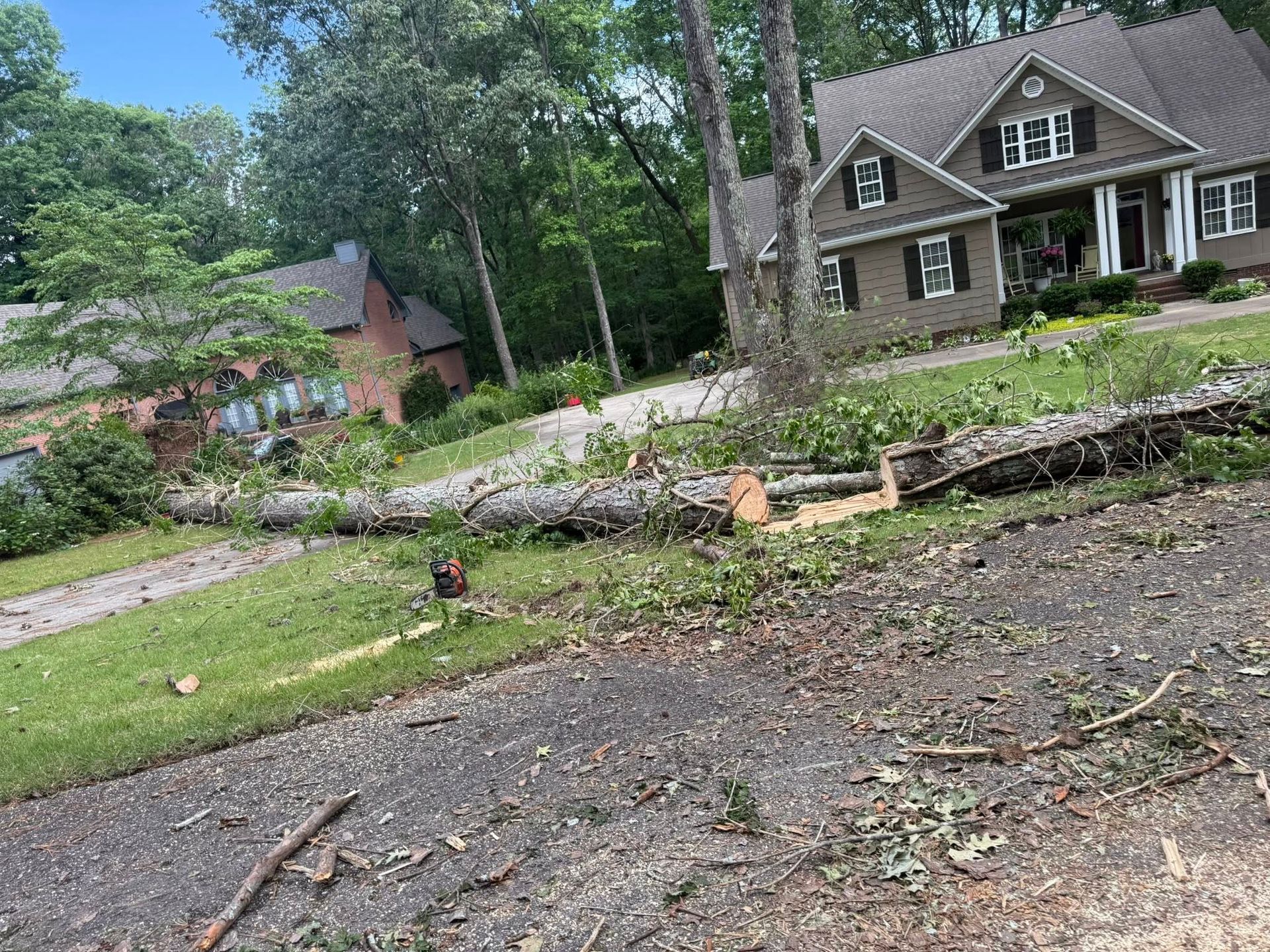
Nothing about a dead branch improves with time. Left alone, it dries out further, becomes lighter and more brittle, and stays attached only as long as nothing stresses the connection point, which in Alabama usually means the next thunderstorm, ice event, or high-wind afternoon. Beyond the fall risk, ignored deadwood can also mask the early stages of a larger problem in the tree, since branch dieback is frequently the first outward symptom of root damage, disease, or prolonged drought stress that is not yet visible anywhere else.
Frequently Asked Questions
How can I tell if a branch is dead instead of just dormant?
Scratch the bark lightly. Green tissue means the branch is alive, while dry brown tissue suggests death. Lack of buds during the growing season and brittle snapping instead of bending are additional warning signs.
Does removing deadwood hurt the tree?
No. Removing dead branches generally benefits the tree by eliminating potential entry points for decay and insects. Proper cuts at the branch collar help the tree naturally seal the resulting wound.
When is the best time of year to remove deadwood?
Deadwood can be removed throughout the year because the branches contain no living tissue. However, late fall and winter often make identification easier because bare canopies reveal cracks, discoloration, decay, and fungal growth.
Can I remove deadwood myself?
Small branches that are safely reachable from the ground may be manageable with proper hand tools. Larger branches, elevated limbs, or branches near power lines should always be handled by trained professionals with appropriate equipment.
How often does a tree need deadwood removed?
Most trees benefit from an inspection every two to three years, although conditions vary by species and location. Trees affected by drought, storms, disease, or construction may require more frequent inspections and maintenance.
Will removing dead branches stop a disease from spreading?
Removing infected branches can sometimes slow or prevent disease from spreading, particularly with certain canker diseases. However, root-level diseases require different treatment. Proper diagnosis helps determine whether pruning can actually improve the tree's condition.
What Deadwood Removal Actually Means
Deadwood removal, sometimes called deadwooding, is the targeted cutting of branches that no longer have living tissue. It is different from general pruning, which shapes a tree or manages its size. Deadwood work is diagnostic first: an arborist walks the canopy, identifies which branches are dead versus dormant, and removes only those with proper cuts at the branch collar, the slightly swollen area where a branch meets the trunk or a larger limb.
Not all deadwood needs to go at once. A study on quantified tree risk assessment published through the International Society of Arboriculture found that removing every dead branch in a canopy is often unnecessary. Branches over roughly 2 inches in diameter that overhang a house, walkway, parking area, or anywhere people spend time are the ones that carry real consequence, and those are the priority.
Why Trees Grow Dead Branches in the First Place
Dead branches are not automatically a sign of a dying tree. Trees regularly shed limbs on their own through a process called self-thinning, sending resources to the parts of the canopy doing the most work and letting the rest go. Alabama's climate and growing conditions add several other common causes on top of that natural process.
Shading And Competition
When a branch sits low in the canopy or gets crowded out by faster-growing neighbors, it stops producing enough energy through photosynthesis to justify keeping it alive. The tree seals it off at the base and lets it die in place.
Drought Stress
According to the Alabama Cooperative Extension System, extended dry periods reduce a tree's ability to move water to its outer branches, and dieback at the branch tips is one of the first visible signs. Huntsville's hot, humid summers with irregular rainfall make this a recurring issue for oaks, maples, and pines across Madison County.
Disease And Decay
Canker fungi and vascular pathogens can girdle a branch from the inside, cutting off its water supply well before any outward symptoms appear. Wood-decay fungi work more slowly, breaking down the branch's structural integrity until it becomes brittle.
Storm And Construction Damage
High winds snap branches or tear bark in ways that expose the wood underneath to decay organisms. Root disturbance from nearby digging, grading, or equipment traffic can starve branches on the opposite side of the canopy from where the damage happened.
Some species are simply more prone to holding onto deadwood longer than others without it signaling a health problem. That is one reason a visual inspection from someone who works on trees daily catches things a homeowner walking the yard is likely to miss.
Tip: A branch is almost always dead, not dormant, if it snaps rather than bends, shows no buds during the growing season, and reveals dry, brown tissue under a scratch of the bark instead of green.
Why Dead Branches Are a Safety Issue, Not Just a Look
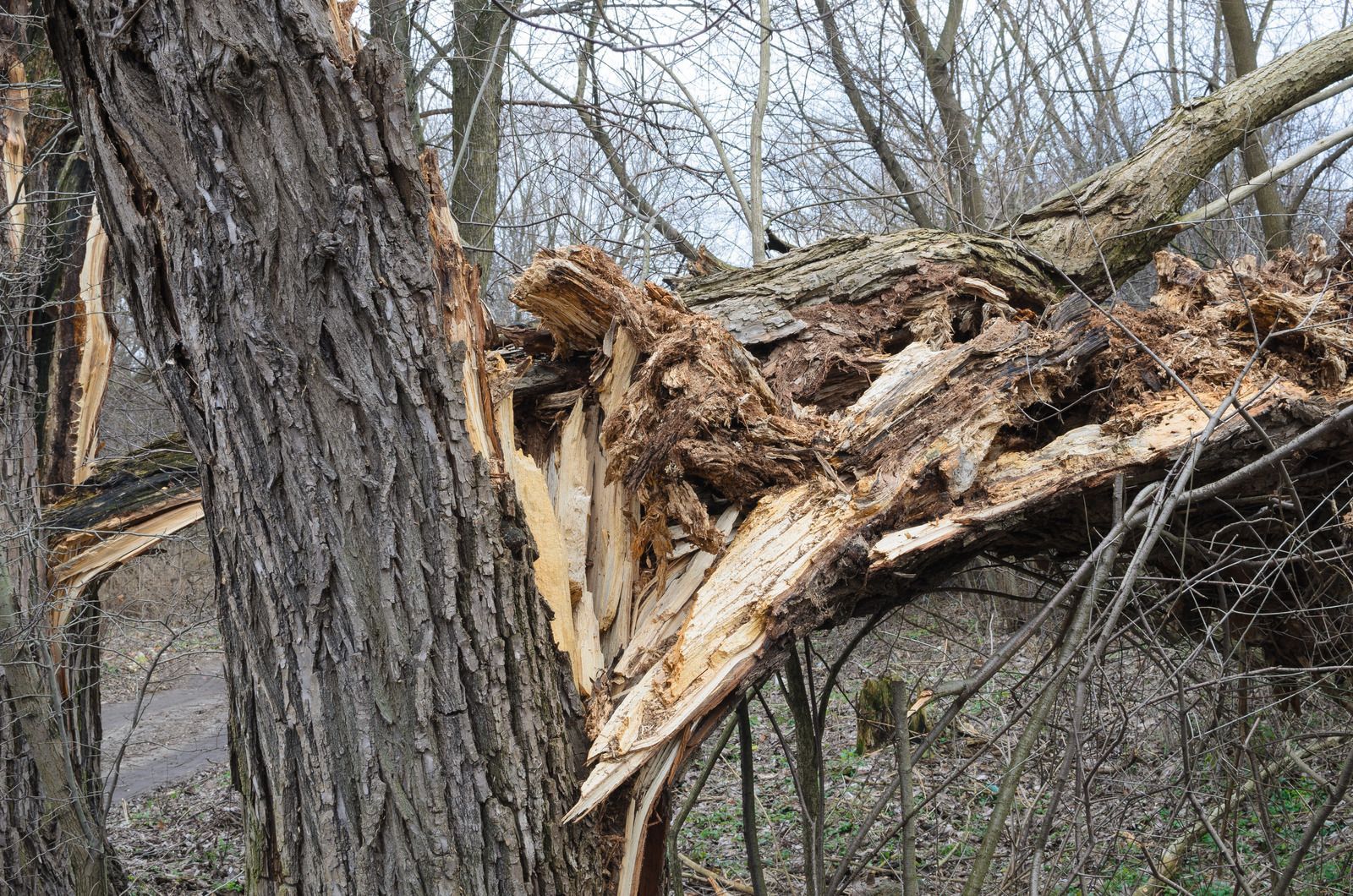
Dead wood loses moisture and flexibility over time, which is exactly what makes it dangerous. A living branch bends in the wind. A dead one does not, and it fails suddenly rather than gradually.
The International Society of Arboriculture's risk assessment framework identifies dead or dying stems and branches as the structural defect assessors encounter most often in the field, and Alabama Cooperative Extension's own hazard-tree guidance confirms it holds the same ranking locally. Combine that with the fact that a Rocky Mountain arborist chapter's field guidance flags anything over 2 inches in diameter as capable of causing serious damage on impact, and the case for removal becomes less about appearance and more about what sits underneath the tree: a roofline, a driveway, a patio, or a spot where kids and pets spend time.
There is a second, slower-moving risk too. Dead branches still attached to a tree can become a foothold for decay fungi and boring insects, which do not always stay contained to the dead tissue. Left long enough, that decay can work its way into the branch collar and, from there, into otherwise healthy wood.
Protecting Your Huntsville Trees From Hidden Hazards
Deadwood may seem like a minor part of routine tree maintenance, but its location and size can turn a quiet branch into a serious hazard. Removing dead, brittle limbs before they fail helps protect people, vehicles, roofs, driveways, and outdoor living areas while also making it easier to spot signs of disease, decay, or stress within the canopy. Regular inspections give homeowners a practical way to address those concerns before weather or gravity makes the decision for them.
For homeowners in Huntsville, AL, Altitude Tree Service, LLC
brings 10
years of hands-on experience to deadwood removal and other professional tree care needs. Careful pruning, proper cutting practices, and attention to the tree's overall condition help preserve both safety and appearance without removing healthy growth unnecessarily. When dead branches are identified and handled at the right time, homeowners can enjoy a healthier, cleaner canopy and greater confidence knowing their trees are being maintained with their long-term condition in mind.